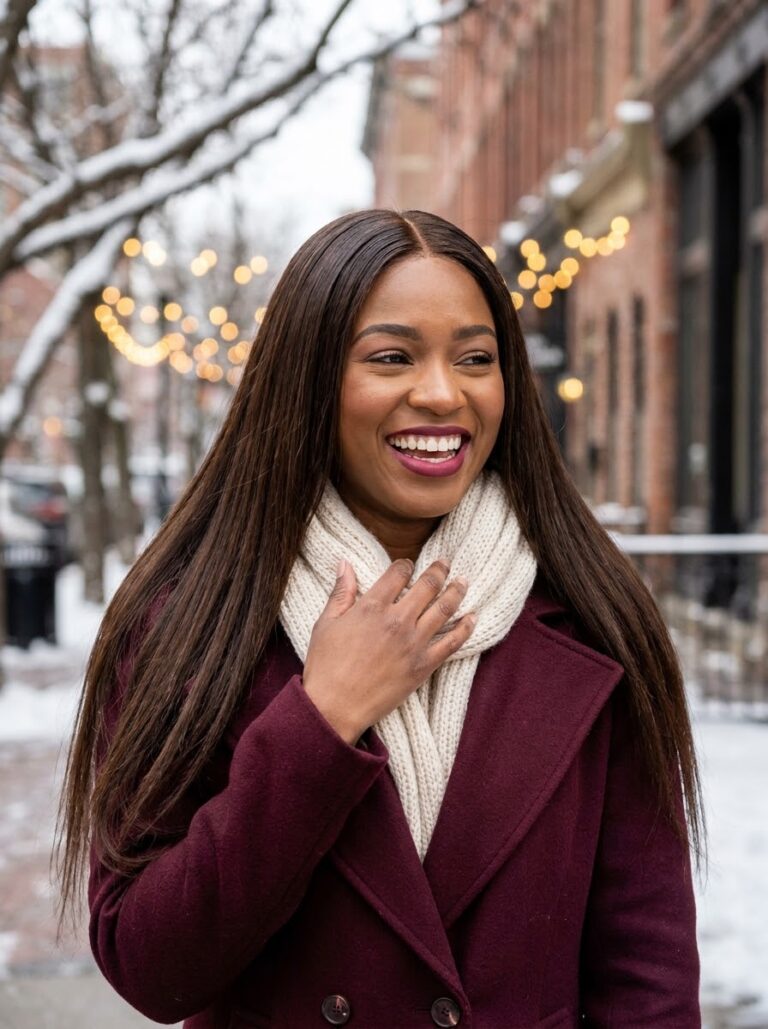
12 Winter Hair Care Tips

Is your hair rough and full of static lately? Winter does that to lots of us. This post is all about winter hair care that really works.
Cold wind pulls water out of your hair. Heated rooms do the same thing. Ends snap and split. Curls lose their bounce.
Below you’ll find 12 easy tips you can start this week. Most of them cost nothing at all. If static is your biggest problem, read How to Stop Static Hair in Winter.
12 Winter Hair Care Tips to Try This Season
1. Wash Your Hair Less Often
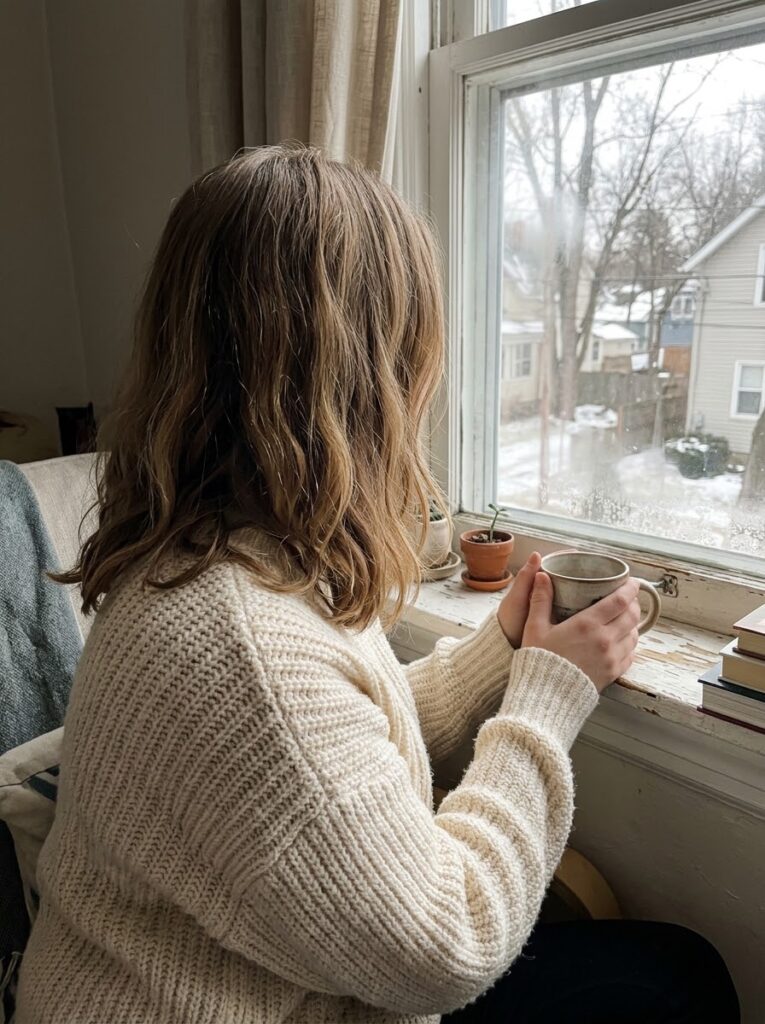
Shampoo cleans your scalp, but it also washes away your natural oils. Those oils help guard your hair from winter air. Try waiting one extra day between washes and see how your hair feels.
Best for: Wavy, curly and coarse hair, plus any hair that feels rough by the end of the day.
Styling: On the day between washes, brush your hair from the ends up to the roots to spread the oils.
Ask your stylist: “How many days can my hair go between washes?”
2. Rinse With Warm Water, Not Hot
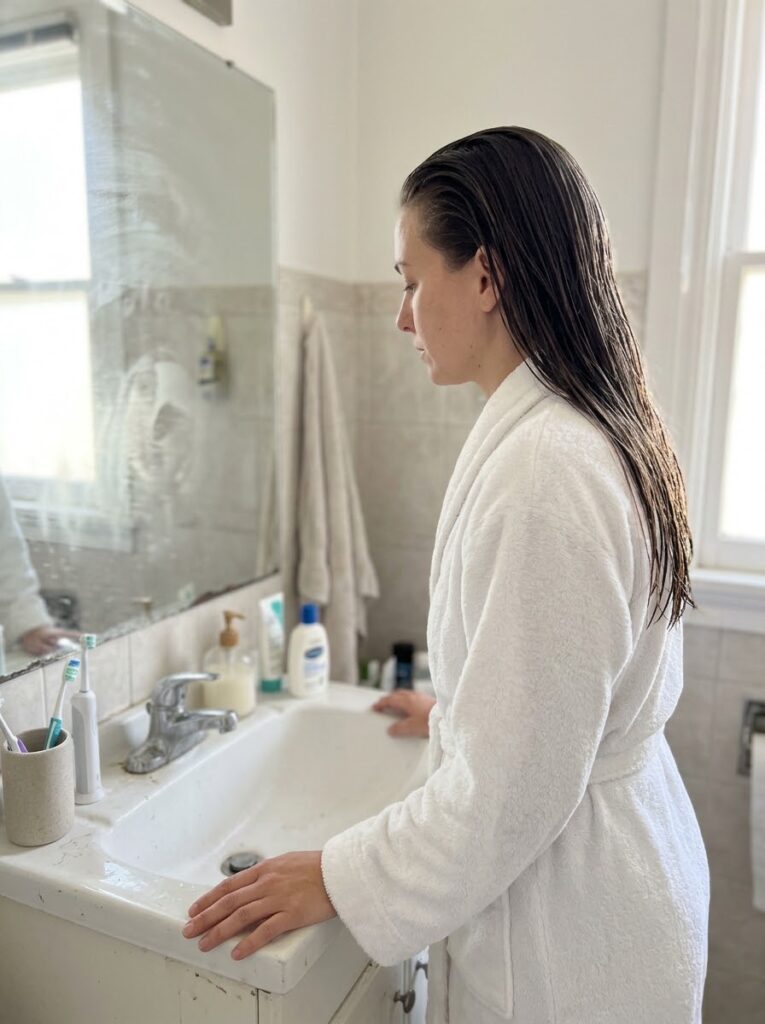
A steamy shower feels great on a freezing morning. But very hot water strips oil from your hair and scalp. Turn it down to warm. It still cleans just as well.
Best for: Every hair type, and anyone whose scalp feels tight after a shower.
Styling: Lower the water before you shampoo, then rinse out your conditioner with cooler water.
Ask your stylist: “Could long showers be fading my color?”
3. Trim Off Damaged Ends
Photo: @zhanehillhair
Winter air makes ends split and break. Split ends can travel up the hair if you leave them. A small trim takes off the damaged part. Your hair looks thicker at the bottom and tangles less. A trim won’t make hair grow faster, but it helps you keep the length you have.
Best for: Medium and long hair of any type.
Styling: Between trims, rub one drop of hair oil on your ends after you dry your hair.
Ask your stylist: “Can you take off only the split ends and keep my length?”
4. Use a Thicker Conditioner Every Time
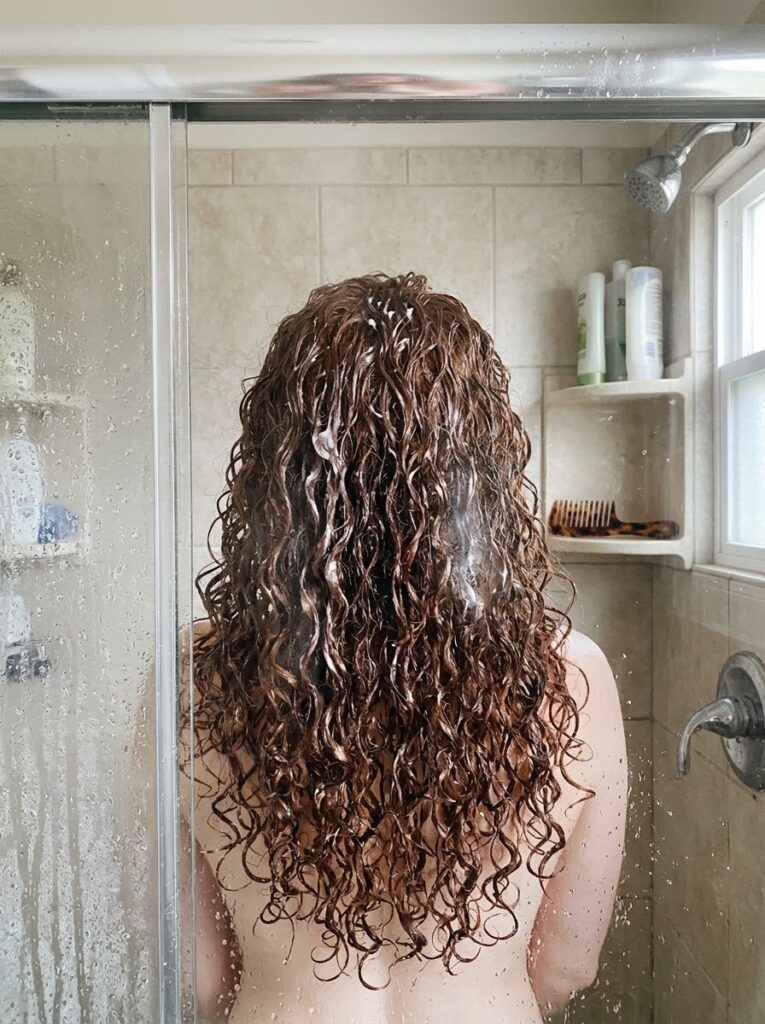
Never skip conditioner in winter. Pick a richer one than you use in summer. Put it on the middle and ends of your hair, not the roots. Leave it on for the time the bottle says, then rinse.
Best for: Thick, coarse, curly and color treated hair.
Styling: Comb it through with a wide tooth comb while it’s still in your hair, so knots slide out.
Ask your stylist: “Which conditioner would you use on my hair in winter?”
5. Add a Weekly Hair Mask

A hair mask is a thick cream you leave on for longer than conditioner. Once a week is enough for most people. Use it after shampoo, in place of your normal conditioner. Bleached and colored hair often need it most. You can also make your own: here are 11 winter hair masks you can make at home. Do a patch test first and follow the product instructions.
Best for: Bleached, colored, curly and very thirsty hair.
Styling: Squeeze out extra water and put the mask on. Cover with a shower cap and rinse after the time on the label.
Ask your stylist: “How often should I use a mask on my colored hair?”
6. Sleep in a Loose Braid
Photo: @hairartistdanielle
Hair that’s left down rubs on your pillow all night. That rubbing makes knots and broken ends. One loose braid keeps the strands together while you sleep. Keep it loose so it doesn’t pull at your scalp.
Best for: Shoulder length and longer hair, straight or wavy.
Styling: Brush out knots and make one braid at the back. Tie the end with a scrunchie, not a thin rubber band. For more bedtime ideas, see Night-Time Hair Care Routine.
Ask your stylist: “Will sleeping in a braid help my ends break less?”
7. Never Go Out With Wet Hair
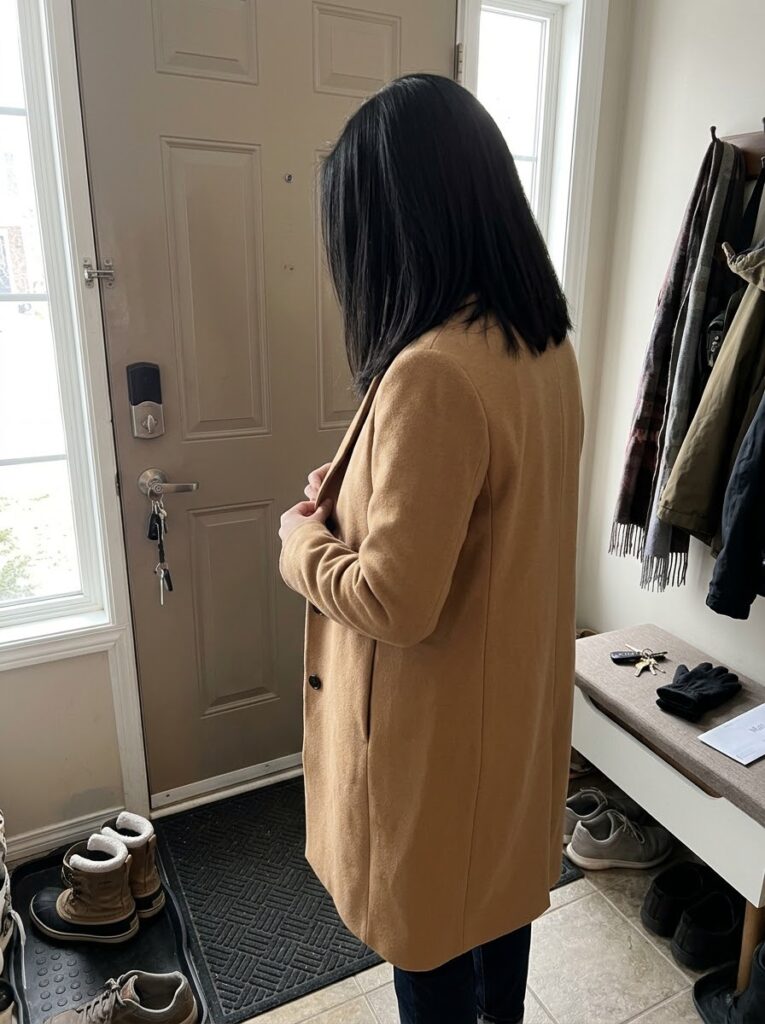
Wet hair stretches and breaks more easily than dry hair. In freezing weather, it can even turn stiff with ice. Give yourself time to dry it before you leave.
Best for: All hair types, mostly women who wash in the morning.
Styling: Wash at night, or blow dry on a low heat setting before you go out.
Ask your stylist: “What’s the quickest way to dry my hair without high heat?”
8. Turn Down the Heat on Your Tools
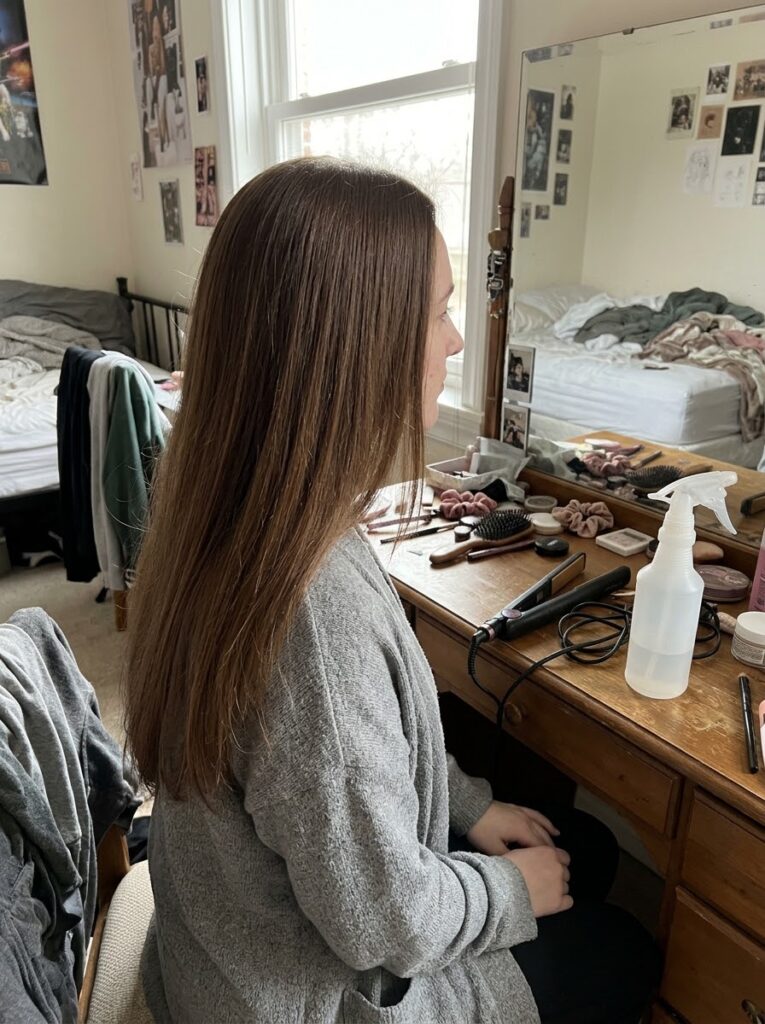
Your hair is already thirsty in winter. A flat iron or curling iron on the top setting makes it worse. Use a lower setting and go slow. Spray a heat protectant on first, every single time.
Best for: Anyone who straightens or curls her hair more than once a week.
Styling: Let your hair dry all the way before you use a flat iron. Pass over each piece only once or twice.
Ask your stylist: “What heat setting is safe for my hair type?”
9. Try Heatless Curls
Photo: @lozcurtis
You can get curls without any heat tool. Wrap damp hair around a soft rod, a robe tie or a sock before bed. Sleep on it, then unwrap in the morning. You wake up with big, bouncy curls and no heat damage. There are lots of ways to do it in Heatless Curls Overnight: 7 Methods That Work.
Best for: Medium and long hair, straight or wavy.
Styling: Start with hair that’s a little damp, not soaking, or the curls won’t dry by morning.
Ask your stylist: “Will my layers hold heatless curls?”
10. Fight Static With a Leave In Conditioner

Static is when your hair flies up and sticks to your hat or sweater. It happens more when the air is dry. A leave in conditioner adds a light layer that helps hair lie flat. Rub a pea size drop between your palms and smooth it over the top. For a full step by step plan, see how to stop static hair.
Best for: Fine and straight hair that floats up under hats.
Styling: Keep a tiny tube in your bag and use it after you take off your hat.
Ask your stylist: “Which leave in product won’t weigh my fine hair down?”
11. Run a Humidifier at Night
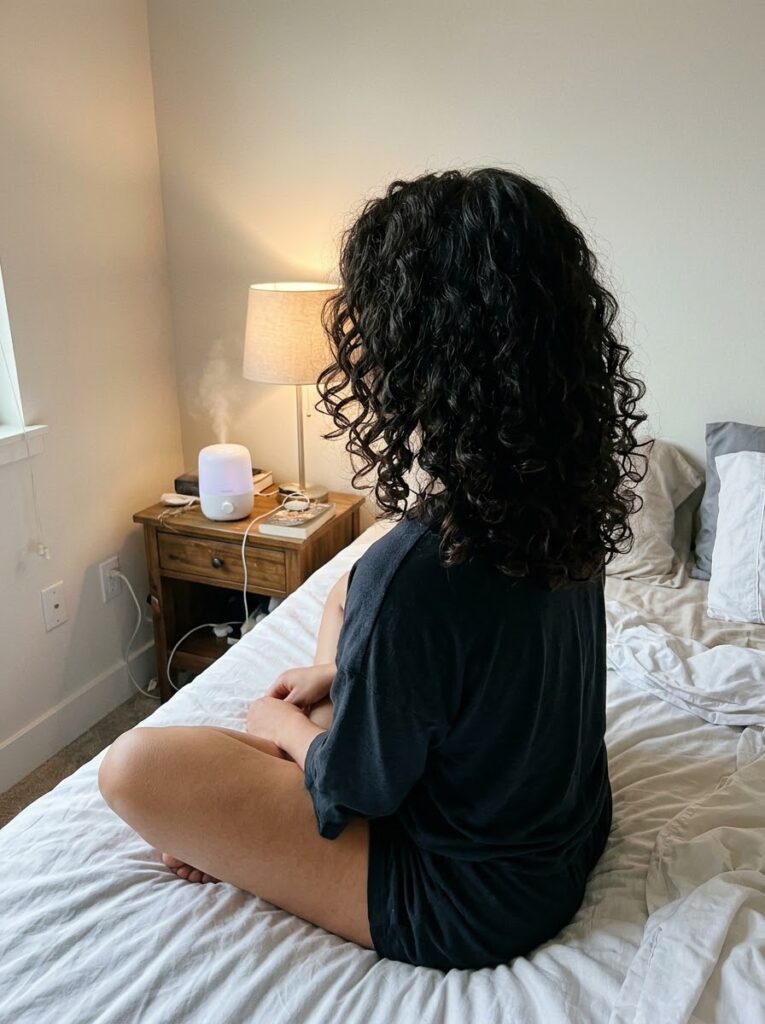
A humidifier is a small machine that puts water into the air. Heating makes the air in your home dry, and your hair feels it. Running one in your bedroom at night helps. Clean it often and follow the instructions in the box.
Best for: Curly and coily hair, and anyone in a home with strong heating.
Styling: Set it a few feet from your bed, not right next to your pillow.
Ask your stylist: “Do my curls need more care in winter than in summer?”
12. Ask for a Hair Gloss
Photo: @meraki_hairdesign
A gloss is a salon treatment that coats your hair and makes it reflect more light. It can be clear or have a little tint. It fades over a few weeks, so you can try it without a big change. If it has color in it, ask for a patch test first.
Best for: Hair that looks dull, and colored hair that has faded.
Styling: Wash with a color safe shampoo to help the shine last longer.
Ask your stylist: “Can I get a clear gloss without changing my color?”
More Tips for Winter Hair
- Pick hats with a satin or silk lining. Rough wool rubs your hair and adds frizz. Find hat friendly looks in Winter Hairstyles That Work With Hats.
- Tuck long hair inside your coat or wear it up when you put on a wool scarf.
- Pat your hair with an old cotton tee after washing. Rubbing with a towel makes knots.
- If frizz is your biggest problem, read How to Get Rid of Frizzy Hair.
- If your scalp itches or flakes and it doesn’t get better, see a doctor or dermatologist.
Frequently Asked Questions
How Often Should I Wash My Hair in Winter?
Most people can wash a little less in winter than in summer. Two or three times a week works for many hair types. If your scalp gets oily fast, it’s fine to wash more often.
Why Does My Hair Get So Much Static in Winter?
Winter air holds less water, both outside and in heated rooms. Hair that’s thirsty picks up static more easily. A leave in conditioner and a hat with a smooth lining both help.
Is It Bad to Go Outside With Wet Hair in Winter?
Hair breaks more easily while it’s damp, and it can freeze in very low temperatures. Dry it fully before you leave. Washing at night makes this easier.
Can Winter Weather Make My Hair Fall Out?
Some women notice more hairs in their brush at different times of year. If you see much more shedding than normal, or bald patches, see a doctor or dermatologist. Don’t try to treat it yourself.
What Is the Best Winter Hair Care Routine for Curly Hair?
Wash less often, use a rich conditioner every time and add a mask once a week. Sleep with your curls protected, and run a humidifier at night. For a full plan, see Curly Hair Routine for Beginners.
Your Winter Hair Plan
You don’t need to do all 12 tips at once. Start with two or three that fit your week. Give them a few weeks and see how your hair feels.